
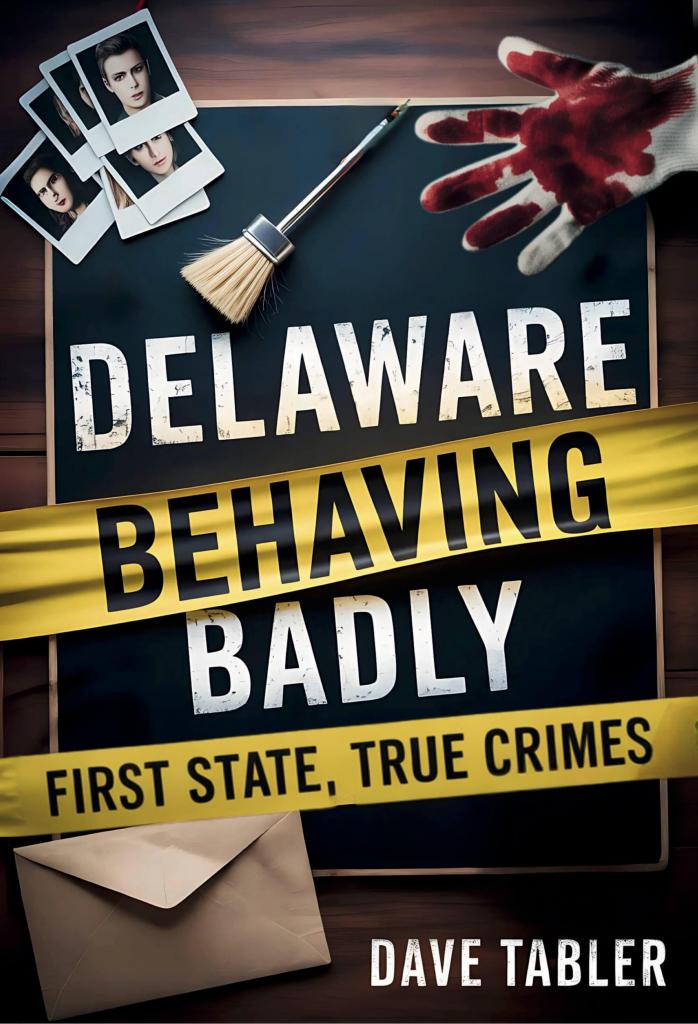
Title: Delaware Behaving Badly: First State, True Crimes
Author: Dave Tabler
Genre: Nonfiction, True Crime
Publisher: Independent
Source: iRead Book Tours
Format: Ebook
Release Date: January 1, 2026
Rating: ★★★★★

Goodreads Synopsis:
Murder, scandal, betrayal, and deceit-Delaware has never been as quiet as its size suggests. Delaware Behaving Badly opens the case files of the First State and reveals stories of crime, corruption, and human folly that shaped communities and haunted memories. These are true accounts, pulled from newspapers, court documents, and eyewitness testimony, that show how ordinary people stumbled into extraordinary-and often disastrous-moments.
Readers will encounter jealous lovers whose passion turned violent, fraudsters who built castles of lies, officials who abused the public trust, and families caught in the aftermath of sudden tragedy. Some stories remain unsolved mysteries, their questions echoing across the decades. Others culminate in dramatic courtroom showdowns where reputations crumbled and verdicts set precedents. Each account is both a window into Delaware’s past and a timeless study of human behavior pushed to its limits.
The book unfolds as a series of sharply drawn narratives. One chapter pulls readers into a nineteenth-century murder trial where public opinion divided towns along bitter lines. Another follows a confidence man whose schemes entangled the unwary and left local banks reeling. Yet another describes crimes of passion that destroyed households and left behind whispered legends. Woven together, these stories remind us that Delaware’s history cannot be told solely through governors and generals. It must also include those who bent or broke the law.
Delaware may be the second smallest state, but its record of scandal is long and colorful. Its compact size meant that crimes quickly became community affairs. A theft in Wilmington could make headlines in Dover by the next morning. A killing in a rural crossroads could ripple outward until the entire county debated guilt and innocence. In such a close-knit place, every misdeed felt personal, every arrest a public event. This intimacy gives the stories in Delaware Behaving Badly unusual power. They do not feel distant. They feel as though they happened to neighbors you might have known.
True crime draws us because it combines suspense with recognition. We read to understand motives, to trace evidence, to watch justice unfold-or fail. At the same time, we see temptations and jealousies that drive people to extremes. The men and women in these pages are not monsters. They are human beings who made choices that shocked those around them and altered the course of their lives forever.
Unlike crime fiction, these stories require no invention. They come from archived newspapers, court records, and diaries that preserve the raw details of Delaware’s darker past. Yet the writing is designed for a broad audience, not for specialists. Each chapter moves briskly, carrying the reader into a new case and unfolding it with a storyteller’s eye for drama and character. The goal is not simply to recount facts but to bring history alive through narrative.
Delaware Behaving Badly will appeal to true crime enthusiasts who love mysteries rooted in fact, to history readers curious about the Mid-Atlantic, and to anyone who enjoys well-told tales of human conflict and consequence. It stands as both entertainment and entertaining because the stories are gripping, historical because they show how communities once wrestled with crime, punishment, and morality.
For fans of works like The Devil in the White City or regional true crime collections, this book offers the same mix of suspense, period detail, and reflection on human nature. Delaware’s small scale makes its scandals especially vivid, and its overlooked history means these stories will be new to most readers.
In these pages, Delaware misbehaves-and its stories prove unforgettable.
Review:
This book describes true crime from the state of Delaware. There are stories from the 1800s all the way to the 2000s. I was fascinated by these stories. There were murders, betrayals, and thefts. I liked how each chapter read like a story about the crime that happened. I was glued to this book and I didn’t want it to end.
Delaware Behaving Badly is a fascinating true crime book!
Thank you iRead Book Tours for providing a copy of this book as part of a sponsored campaign!
Content warnings: murder, racism, sexual assault, theft
Have you read Delaware Behaving Badly? What did you think of it?